
Diverticulosis vs. Diverticulitis: Stop Mixing Them Up
It’s very common for patients to confuse diverticulosis with diverticulitis. Although they are related, they are not the same condition and they don’t carry the same risks. Understanding the difference is essential for protecting digestive health and preventing complications.
What is diverticulosis?
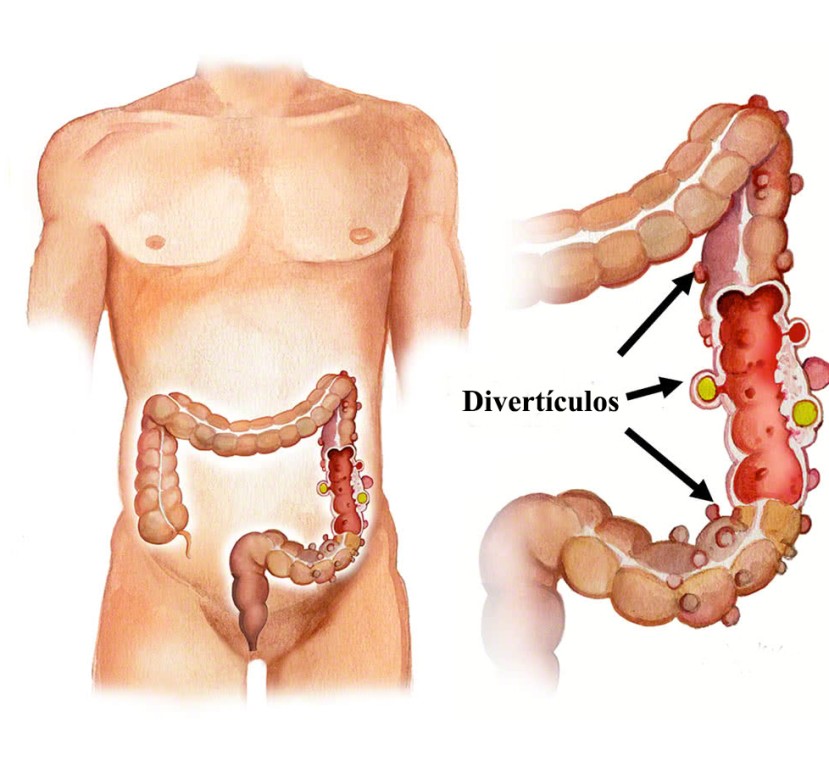
Diverticulosis refers to the presence of small pouches —called diverticula— in the wall of the colon.
It becomes more common after the age of 50, and in most cases causes no symptoms at all.
These diverticula form when pressure inside the colon increases, especially in weaker areas of the intestinal wall.
Main causes
-
Low-fibre diet, which slows bowel movement and increases pressure inside the colon
-
Sedentary lifestyle
-
Obesity
-
Ageing
Can diverticulosis cause problems?
Most people with diverticulosis never develop symptoms. However:
-
Diverticula may bleed (uncommon)
-
The most frequent complication is diverticulitis
What is diverticulitis?
Diverticulitis occurs when one or more diverticula become inflamed or infected.
Unlike diverticulosis, diverticulitis does cause symptoms and requires medical assessment.
Typical symptoms
-
Abdominal pain, most often in the lower left side
-
Fever
-
Nausea or vomiting
-
Changes in bowel habits (diarrhoea or constipation)
-
Progressive pain that worsens over time
Diagnosis
The most accurate test is a CT scan, which allows visualising inflamed diverticula and surrounding tissue.
A blood test is also performed to detect inflammation or infection.
The 4 stages of diverticulitis
Diverticulitis is classified according to the severity of inflammation and complications:
-
Stage 1: Uncomplicated diverticulitis (inflammation only)
-
Stage 2: Small abscesses near the inflamed diverticula
-
Stage 3: Large abscesses or ruptured abscesses causing peritonitis
-
Stage 4: Severe peritonitis with widespread infection in the abdominal cavity
Complications of diverticulitis
If not treated promptly, diverticulitis can lead to:
-
Intestinal perforation
-
Colon obstruction
-
Fistulas
-
Abscesses
-
Peritonitis
Many of these complications require hospital care and sometimes surgery.
Treatment options
Management depends on the severity and clinical presentation:
Mild cases
-
Oral antibiotics
-
Temporary low-fibre diet
-
Clinical follow-up
Moderate to severe cases
-
Hospital admission
-
Intravenous antibiotics
-
Abscess drainage if necessary
-
Surgery, in cases of complications or recurrent episodes affecting quality of life
If you experience persistent abdominal pain or symptoms suggesting diverticulitis, seek medical evaluation to receive appropriate treatment in time.