
Pilonidal Cyst: What It Is, Why It Appears, and the Best Treatment Options
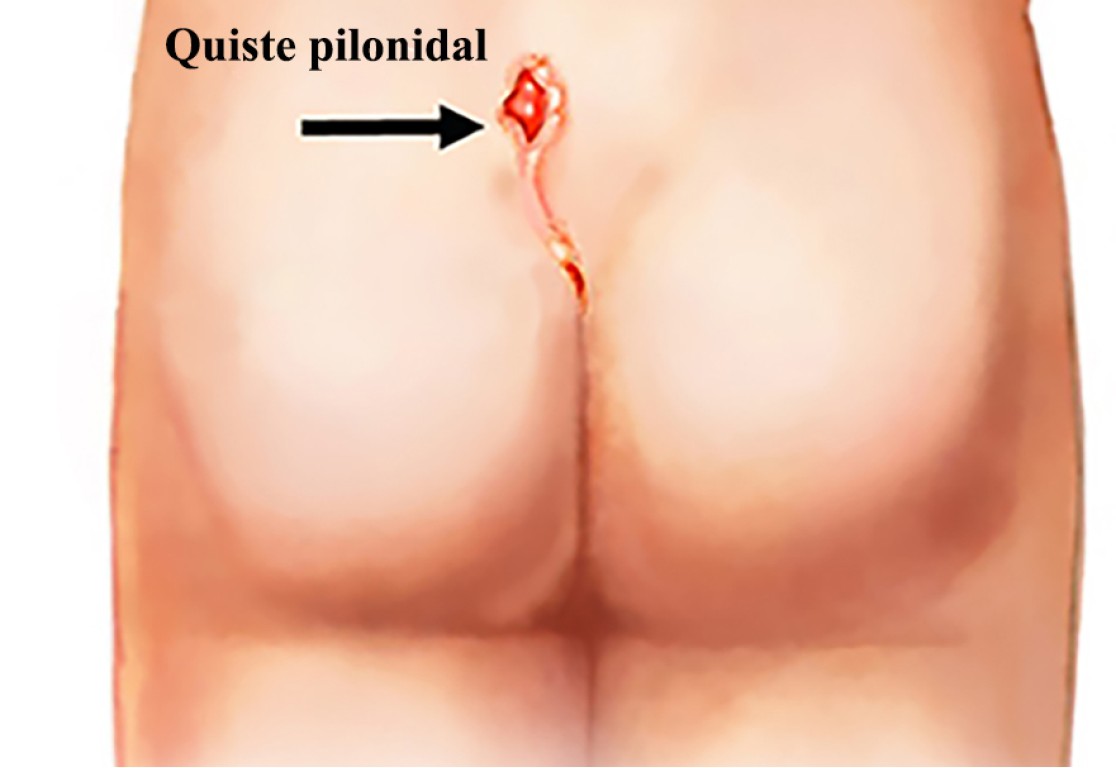
A pilonidal cyst is a lesion that develops in the crease between the buttocks, just above the coccyx. Despite its unusual name, it simply means “nest of hair”, because it often contains trapped hairs and inflammatory material inside.
It is very common in young adults, especially men, and can cause pain, swelling, and—in acute phases—abscesses that require urgent treatment.
Why it develops (and why it’s not your fault)
A pilonidal cyst is considered an acquired condition. The most accepted explanation involves:
-
repeated friction in the area,
-
prolonged sitting,
-
hairs penetrating the skin,
-
and a local inflammatory reaction that eventually forms a cyst or sinus tract.
It is not caused by poor hygiene. It happens because the area is anatomically prone to irritation and hair trapping.
Common risk factors
-
Age and gender: more frequent in men between 15 and 35 years
-
Excess body hair, especially in the lower back area
-
Obesity, due to increased friction
-
Sedentary lifestyle, long hours sitting
-
Sports or jobs that cause microtrauma (cycling, driving, etc.)
Possible complications
A pilonidal cyst may remain silent for months, or it can progress to:
-
Pilonidal abscess: intense pain, swelling, and pus; usually requires drainage
-
Fistulas: tracts connecting the cyst to the skin surface
-
Recurrences: common if the definitive treatment is not performed
-
Systemic infection: rare, but possible in severe untreated cases
How it is diagnosed
Diagnosis is usually clinical. Patients often report pain, swelling, or discharge in the sacrococcygeal area.
During the physical exam, the surgeon may find:
-
a sinus opening,
-
a tender swollen area,
-
or a fistula tract.
In more complex cases, ultrasound or MRI can help assess the extent of the cyst and detect multiple tracts.
Treatment options
The treatment depends on whether the condition is in an acute or chronic phase.
Acute phase (pilonidal abscess)
The priority is to control the infection.
Treatment typically involves surgical drainage to relieve pain and remove infected material.
The cyst itself is not removed at this stage, as inflammation makes healing more difficult.
Chronic phase (cyst or fistulas)
Here the goal is to resolve the condition effectively and prevent recurrence. Options include:
-
Traditional excision, with open or closed healing
-
Minimally invasive techniques, for selected cases
-
Flap procedures, for complex or recurrent cysts
The role of the surgeon
As a surgeon, my role is to guide you through every step—from initial diagnosis and interpretation of imaging when needed, to choosing the safest and most effective treatment for your case.
A well-planned intervention lowers the risk of infection, shortens recovery time, and reduces the chance of recurrence.
Dealing with pain, swelling, or recurrent episodes?
Let’s review your case carefully and discuss the best treatment options.